The Top 5 Design Mistakes Most Homeowners Make with Their Unfinished Basements
Picture this: a square footage equivalent to your home’s main floor, brimming with potential, currently serving as a chaotic landscape of holiday decorations, old furniture, and forgotten hobbies. For many Saskatoon homeowners, this isn’t a hypothetical; it’s the reality of their unfinished basement. The dream of a functional, beautiful lower level often gets derailed by a few critical, yet common, design mistakes. As a high-end basement contractor, we’ve seen firsthand how these missteps can turn a promising investment into a source of regret. Before you frame a single wall, let’s walk through the five biggest design errors and how to avoid them, ensuring your project adds lasting value and enjoyment to your home.
Mistake #1: Ignoring the “Silent Killer” – Moisture and Air Quality
Before you even think about flooring or paint colours, you must address the single most destructive force in any below-grade space: moisture. Ignoring signs of water intrusion is the number one mistake that leads to costly repairs, health concerns, and a finished space you can’t stand to be in. Basements are naturally prone to dampness, and here in Saskatoon, our clay-rich soil and dramatic freeze-thaw cycles can put immense hydrostatic pressure on foundations.
Common Situation: A homeowner, excited about their project, covers a small crack in the foundation wall with framing and drywall. A year later, they notice a musty smell and discoloration at the bottom of the new wall. Peeling back the drywall reveals a shocking amount of black mold, which has compromised the air quality of the entire home. The “fix” now involves tearing out the new construction, professional mold remediation, and then addressing the original foundation issue—a vastly more expensive and stressful undertaking.
Experts in basement finishing consistently find that a proactive approach is non-negotiable. This involves:
- Professional Assessment: Checking for foundation cracks, efflorescence (a white, powdery residue on concrete), and signs of seepage.
- Proper Waterproofing: This can range from interior sealants to more robust exterior membranes and weeping tile systems.
- Effective Drainage: Ensuring your exterior grading slopes away from the foundation and that your eavestroughs and downspouts are clear and directing water far from your home.
- Climate Control: Installing a quality sump pump and considering a whole-home dehumidifier to manage condensation.
Starting with a dry, healthy foundation isn’t just a recommendation; it’s the only way to protect your investment and your family’s well-being.
Mistake #2: A Layout That Fights Your Family’s Flow
One of the most common pitfalls in custom basement development is poor space planning. Homeowners often default to recreating a main-floor layout downstairs, resulting in a series of small, cramped, and dark rooms that don’t serve their actual needs. The goal isn’t just to add rooms; it’s to add functional, enjoyable living space.
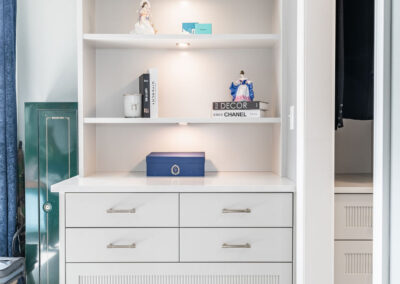
Basement finishers in Saskatoon frequently encounter layouts that awkwardly chop up the available space without considering the fixed elements. Support columns, ductwork, and plumbing rough-ins aren’t obstacles; they are guideposts for a smart design. A skilled designer can cleverly integrate these elements into walls, build them into custom cabinetry, or make them features of a room, like a wrap-around bar or shelving unit.
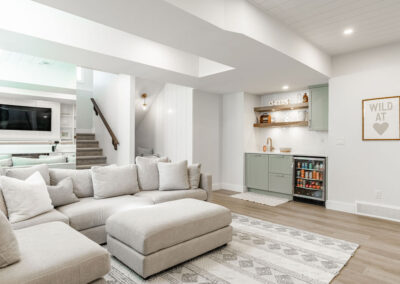
Hypothetical Example: A family with young children decides they want a separate playroom, a home office, and a TV area. They frame three small, distinct rooms. The result? The playroom feels isolated, the office is claustrophobic, and the TV area is too small for the whole family to gather comfortably. A better approach would have been an open-concept design with designated zones. A large family room could incorporate a play area at one end, a comfortable media zone, and a discreet office nook tucked under the stairs. This creates a more social, flexible, and brighter space that can adapt as the children grow.
Before finalizing a layout, ask yourself:
- How will we really use this space in five or ten years?
- Does the layout promote flow and connectivity, or does it create barriers?
- Have we considered sightlines and how the space feels as you walk through it?
- Can we use partial walls, glass partitions, or strategic furniture placement to define areas without sacrificing an open feel?
If you are feeling overwhelmed by layout possibilities, remember that this is where professional expertise shines. For professional guidance on creating a floor plan that truly works for your family, Axium Interiors can help evaluate your specific situation and design an ultra premium basement finishing plan that matches your lifestyle.
Mistake #3: Underestimating the Power of Light
The stereotypical “dungeon” basement is almost always a result of a poor lighting plan. A few ceiling-mounted fixtures are simply not enough to make a below-grade space feel warm, inviting, and functional. A well-designed basement utilizes layers of light to create ambiance, support activities, and make the space feel larger and more welcoming.
Industry professionals recommend a three-layered approach:
- Ambient Lighting: This is the overall illumination for the space. Recessed pot lights are a popular choice as they provide broad, even light without lowering the perceived ceiling height.
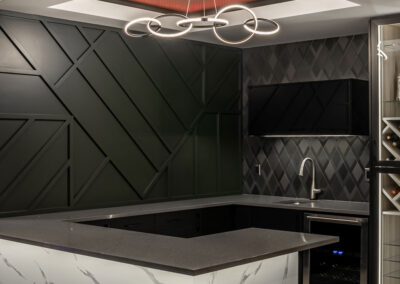
- Task Lighting: This is focused light for specific activities. Think pendant lights over a bar or pool table, under-cabinet lighting in a kitchenette, or a dedicated lamp in a reading nook.
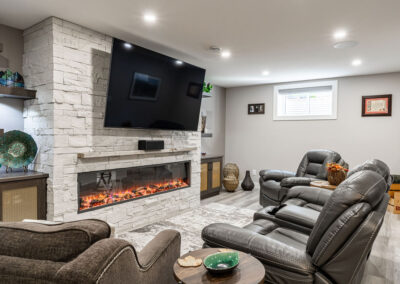
- Accent Lighting: This is used to highlight architectural features or décor, such as spotlights on a stone feature wall or sconces flanking a piece of art.
Insider Tip: Pay attention to the “temperature” of your light bulbs, measured in Kelvins (K). A warm white light (around 2700K-3000K) creates a cozy, comfortable atmosphere ideal for living areas, while a cooler, neutral white (3500K-4000K) is better for task-oriented spaces like a home gym or laundry room. Dimmer switches are also a cost-effective way to add immense flexibility, allowing you to brighten the space for game night and dim it for a movie.
Maximizing natural light is also crucial. This could involve enlarging existing windows or, where possible, installing larger egress windows, which not only brighten the space but are a critical safety requirement for any legal bedroom.
Mistake #4: Choosing the Wrong Materials for a Below-Grade Environment
A basement is not the same as a main floor, and it requires materials specifically designed to handle its unique challenges. Choosing materials based purely on aesthetics without considering moisture and temperature fluctuations is a recipe for failure.
Flooring is the biggest culprit. Experts consistently advise against using solid hardwood in a basement. It will inevitably absorb ambient moisture, leading to cupping, warping, and costly replacement. Instead, consider these high-performance options:
- Luxury Vinyl Plank (LVP): This is the reigning champion of basement flooring. It is 100% waterproof, highly durable, and modern versions offer incredibly realistic wood and stone looks.
- Engineered Hardwood: Constructed with a stable core, this flooring can handle the temperature and humidity swings of a basement far better than solid wood.
- Carpet: Carpet provides warmth and sound absorption, but it’s crucial to install a high-quality moisture-barrier underpad to prevent dampness from seeping up from the concrete slab.
- Ceramic or Porcelain Tile: Tile is completely waterproof and indestructible, making it ideal for basement bathrooms, laundry rooms, or wet bars.
Insulation is another key area. Proper insulation is vital for both comfort and energy efficiency during our cold Saskatoon winters. A common mistake is putting standard fiberglass batt insulation directly against a cold concrete wall. This can trap moisture, leading to mold. The best practice is to install a continuous layer of rigid foam insulation against the foundation wall before framing, which acts as both insulation and a vapor barrier.
Choosing the right materials is crucial for longevity and performance. Our team specializes in custom basement finishing using products specifically designed to last in the Saskatoon area’s unique climate.
Mistake #5: Forgetting the Legalities and Future Value
In the rush to get a project started, it can be tempting to bypass the official channels. However, skipping permits is a significant financial and legal risk. The City of Saskatoon requires a building permit for all basement developments. This process ensures that all work—from framing and electrical to plumbing and fire safety—is inspected and complies with the National Building Code. A project built without a permit can lead to fines, orders to tear out completed work, and major complications when you decide to sell your home.
This is especially critical for anyone considering basement suite construction. A “legal basement suite” in Saskatoon isn’t just a basement with a kitchen; it’s a secondary dwelling unit that must meet a stringent set of requirements. These include:
- A Separate Entrance: The suite must be a self-contained unit with its own safe exit path.
- Egress Windows: Every bedroom requires an egress window with a minimum opening size (0.35 sq m) and dimension (no side less than 380mm) for emergency escape.
- Fire Separation: Fire-rated drywall (often Type X) and solid-core doors with self-closing devices are required between the suite and the main house to create a smoke-tight barrier.
- Independent HVAC: Air cannot be shared between the two units, meaning the suite needs its own furnace or heating source and a separate ventilation system (HRV).
- Soundproofing: The walls and ceiling separating the units must meet a minimum Sound Transmission Class (STC) rating to ensure privacy.
Building a legal suite correctly not only ensures the safety of its occupants but can significantly increase your property value and provide a reliable source of rental income. Working with a knowledgeable basement contractor who understands the specific requirements for a legal basement suite in Saskatoon is the best way to protect your investment.
Local Expert FAQ
What is the typical basement development cost per square foot in Saskatoon?
This is one of the most common questions, but the “per square foot” metric can be misleading. Costs vary dramatically based on design complexity, material choices, and existing conditions. Generally, you might see a range from $50-$70 per sq. ft. for a basic finish, $80-$120 for a popular custom finish, and upwards of $150 for an ultra-premium development with high-end features. A legal basement suite will typically fall into the mid-to-high end of that range due to the added mechanical and code requirements.
How long does a custom basement development project usually take?
A typical full basement renovation takes approximately 6-12 weeks from the start of construction to completion. This timeline can be affected by the scope of the project, permit approval times, and the scheduling of specialized trades like plumbers and electricians.
What are the first steps if I want to build a legal basement suite in Saskatoon?
The very first step is to consult with a professional basement contractor. They will assess your property’s zoning, check for structural requirements like ceiling height (minimum 1.95m or 6’5″) and entrance options, and help you understand the full scope of work required to meet the National Building Code and local bylaws.
Can you effectively hide structural posts and ductwork?
Absolutely. A premium basement design expert doesn’t see these as problems but as design opportunities. Posts can be integrated into walls, bars, or built-in shelving. Ductwork can be hidden within bulkheads that can be enhanced with feature lighting or used to define different “zones” within an open-concept space.
Key Takeaways
- Moisture First: Always address any and all moisture issues before any finishing work begins. A dry basement is a healthy basement.
- Plan for Life: Design a flexible layout that suits your family’s long-term needs, prioritizing open, multi-functional spaces over many small rooms.
- Layer Your Lighting: Use a combination of ambient, task, and accent lighting to make your basement feel bright, warm, and inviting.
- Choose Materials Wisely: Select flooring, insulation, and other materials specifically designed for below-grade environments to ensure durability.
- Don’t Skip the Permit: Work with a professional contractor to ensure your project is fully permitted and compliant with all city codes, especially for a legal basement suite.
Disclaimer
While we aim for accuracy, please verify details for your specific situation. For personalized advice and to discuss how these insights apply to your specific needs, we would love to chat with you directly.
Your Dream Basement Awaits
Avoiding these common design mistakes is the first step toward transforming your unfinished basement from a forgotten space into the heart of your home. A well-designed, professionally executed basement renovation is one of the best investments you can make, adding valuable living space and increasing your property’s market appeal. If you’re ready to explore the full potential of your lower level, Axium Interiors is here to help. As Saskatoon’s trusted high-end basement contractor, we specialize in premium basement design and custom finishing. Contact us today for a consultation and let’s start building the basement you’ve always envisioned.