The Invisible Suite: How to Build a Legal Rental That Doesn’t Feel Like a Basement
In Saskatoon, the demand for high-quality rental accommodations continues to rise, prompting homeowners to explore innovative ways to maximize their property’s potential. One such approach is transforming basements into legal rental suites that defy traditional expectations—creating spaces that are both compliant with regulations and indistinguishable from above-ground living areas. This guide delves into the professional strategies and local insights necessary to achieve this transformation.
Understanding Saskatoon’s Secondary Suite Regulations
Before embarking on a basement suite project, it’s imperative to comprehend the local regulations governing secondary suites in Saskatoon. Compliance ensures safety, legality, and marketability.
Key Regulatory Requirements
- Permitted Locations: Secondary suites are allowed within single-family and semi-detached homes but are prohibited in dwelling groups, two-unit dwellings, rowhouses, or townhouses. [1]
- Size Constraints: A secondary suite must not exceed 80 square meters (861 square feet) and cannot occupy more than 40% of the gross floor area of the dwelling. [1]
- Separate Entrances: Each suite must have a distinct entrance, ensuring privacy and safety for both occupants. [1]
- Parking Requirements: As of July 2024, Saskatoon has removed minimum parking requirements for residential properties, including those with secondary suites. [2]
Recent Policy Updates
In March 2025, Saskatoon amended its Official Community Plan and Zoning Bylaw to permit secondary suites in semi-detached dwellings, expanding housing options and promoting affordability. [3]
Designing a Basement Suite That Feels Like Home
Creating a basement suite that rivals above-ground living spaces involves strategic design choices that enhance light, space, and comfort.
Maximizing Natural Light
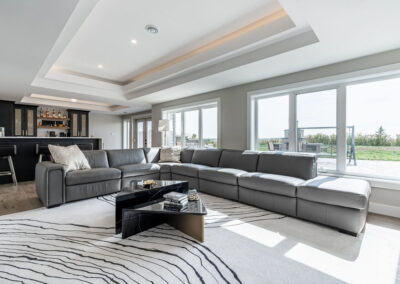
Incorporating large egress windows not only meets safety requirements but also floods the space with natural light, reducing the typical basement feel. Proper window wells and reflective surfaces can further amplify brightness. [4]
Open-Concept Layouts
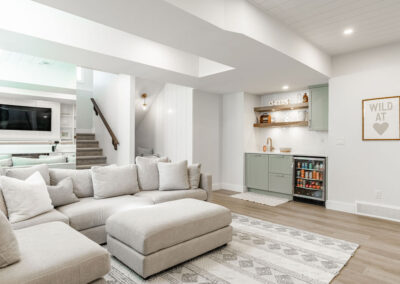
Open floor plans create a sense of spaciousness. Removing unnecessary walls and using consistent flooring materials can unify the space, making it feel larger and more inviting. [5]
High-Quality Finishes
Utilizing premium materials such as moisture-resistant drywall, luxury vinyl plank flooring, and modern fixtures elevates the aesthetic and durability of the suite, appealing to discerning tenants. [6]
Ensuring Compliance with Building Codes
Adherence to building codes is non-negotiable for legal suites. Key considerations include:
- Fire Safety: Installation of fire-rated drywall, doors, and interconnected smoke and carbon monoxide detectors is mandatory. [6]
- Soundproofing: Proper insulation and sound barriers between units ensure privacy and comfort for all occupants. [6]
- Ventilation: Independent heating and ventilation systems prevent air quality issues and maintain separate climate control. [6]
Financial Incentives and Considerations
Investing in a basement suite can be financially rewarding, especially with available incentives.
Saskatchewan Secondary Suite Incentive (SSI) Grant
Homeowners can receive up to 35% of construction costs, to a maximum of $35,000, for building a new secondary suite. This program aims to increase rental availability and assist homeowners with affordability. [7]
Cost Management
While high-quality finishes and compliance with codes may increase initial costs, the long-term benefits include higher rental income, increased property value, and reduced maintenance expenses.
Local Success Stories
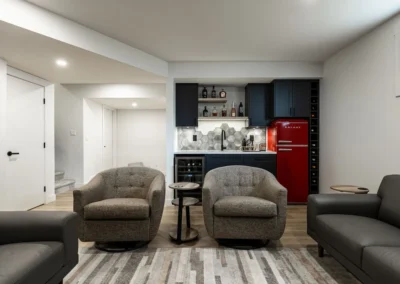
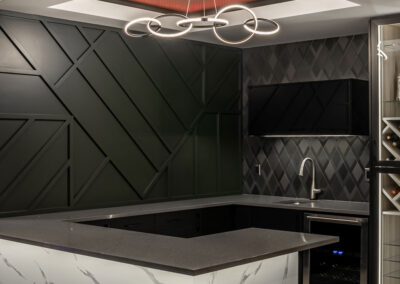
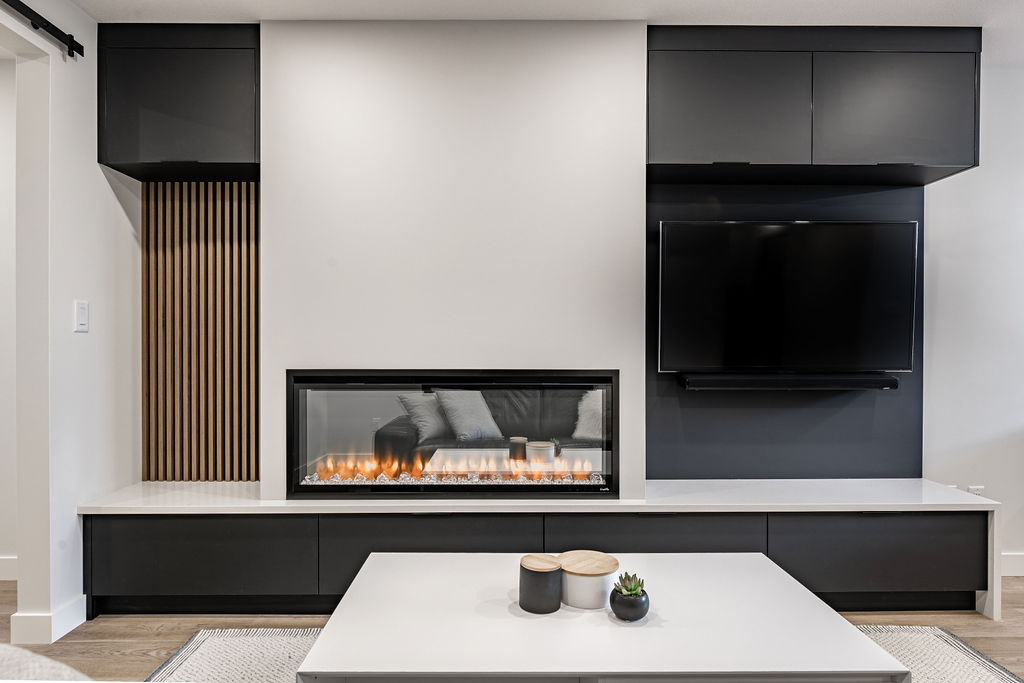
Recent projects in Saskatoon exemplify the potential of well-designed basement suites. For instance, a 2023 renovation transformed an unfinished basement into a luxurious lounge featuring custom vertical slat walls, a sleek bar, and ambient lighting, creating an inviting atmosphere for social gatherings. [8]
Local Expert FAQ
What are the egress requirements for basement suites in Saskatoon?
Each bedroom must have an egress window with an unobstructed opening of at least 0.35 square meters (3.77 square feet), with no dimension less than 380 mm (1’3”). There must also be a 760 mm (30”) clearance in front of the window. [4]
Are there specific soundproofing standards for legal basement suites?
Yes, proper insulation and sound barriers are required to minimize noise transfer between units, ensuring privacy and comfort for all occupants. [6]
Can existing basements be converted into legal suites?
Absolutely. Existing basements can be renovated to meet legal suite standards, provided they comply with all building codes and zoning regulations. [9]
Key Takeaways
- Understanding and adhering to Saskatoon’s secondary suite regulations is crucial for legality and safety.
- Design strategies focusing on natural light, open layouts, and high-quality finishes can make basement suites feel like above-ground living spaces.
- Compliance with building codes, including fire safety and soundproofing, is essential.
- Financial incentives, such as the SSI Grant, can offset construction costs.
- Successful local projects demonstrate the potential of well-executed basement suites.
While we aim for accuracy, please verify details for your specific situation. For personalized advice and to discuss how these insights apply to your specific needs, we’d love to chat with you directly.
For expert guidance and premium basement development services in Saskatoon, consider reaching out to Axium Interiors. Our team specializes in creating custom basement suites that meet all legal requirements while providing comfortable and attractive living spaces.