The Costly Mistake Haunting 80% of Saskatoon’s Unfinished Basements
Picture this: you’ve just invested in a premium basement development. The custom-built entertainment unit is installed, the plush carpeting is down, and the sleek, modern wet bar is ready for its first gathering. Six months later, you notice a faint, musty smell. A year later, the corner of that beautiful new carpet feels damp. You pull it back to find dark, creeping mould and a hairline crack in the foundation that has been silently weeping water. This scenario isn’t just a homeowner’s nightmare; it’s a reality for many who make one critical, costly mistake: treating an unfinished basement as a blank canvas instead of an active, underground structure. The vast majority of homeowners see empty concrete and open joists and immediately jump to design and aesthetics. They overlook the subtle, existing issues that, if left unaddressed, will inevitably ruin their entire investment. Industry professionals consistently find that failing to proactively diagnose and resolve underlying moisture and structural issues before finishing is the single most expensive error a Saskatoon homeowner can make.
The Silent Threat Below: What’s Really Happening in Your Unfinished Basement?
Before a single 2×4 is cut, an expert basement contractor sees far more than empty space. They see a complex system under constant pressure from the unique geological and climatic conditions of Saskatoon. Ignoring this reality is like building a house on a shaky foundation—literally. The costly mistake is assuming your concrete fortress is impenetrable and perfectly stable.
Basement finishing providers in Saskatoon commonly encounter homeowners who are completely unaware of the subtle red flags in their “dry” basement:
- Efflorescence: A white, chalky powder on concrete walls or floors. Many dismiss it as dust or old paint, but it’s actually a deposit of mineral salts left behind as water seeps through the concrete and evaporates. It is a clear sign of moisture intrusion.
- Hairline Cracks: Tiny cracks in the foundation walls or floor are often ignored. However, due to Saskatoon’s expansive clay soil, even the smallest fissure can widen over time, becoming a pathway for water and harmful soil gases.
- Damp, Musty Odour: That classic “basement smell” is not normal. It’s often the first indicator of hidden mould or mildew growth resulting from high humidity or microscopic leaks.
- Sticking Doors or Windows Upstairs: If doors and windows on the main floor suddenly start to jam, it can be a sign of foundation settlement or movement below.
Consider a typical scenario: A homeowner has an unfinished basement that has never had a major flood. They assume it’s dry and hire a contractor who immediately starts framing and drywalling. They’ve just hidden a ticking time bomb. The unseen moisture continues to wick through the concrete, gets trapped behind the new vapour barrier and drywall, and creates a perfect breeding ground for toxic mould. A few years later, a $50,000 renovation is ruined, and they’re facing an additional $25,000 bill for mould remediation and rebuilding.
Why “Dry for Now” is a Dangerous Assumption in Saskatoon’s Climate
The ground beneath your home here in Saskatoon is not static. It’s a dynamic environment that puts immense stress on your foundation, making proactive moisture management non-negotiable for any premium basement design.
Professionals in the Saskatoon area understand two key local challenges:
- Expansive Clay Soil: The soil in this region is predominantly clay-based. This type of soil acts like a sponge; it swells significantly when it absorbs water (from spring melts or heavy rain) and shrinks as it dries. This constant expansion and contraction exerts incredible, cyclical pressure on your foundation walls, causing cracks and movement.
- Intense Freeze-Thaw Cycles: Saskatoon’s climate is known for its dramatic temperature swings. During winter, moisture in the soil freezes and expands—a phenomenon known as “frost heave”—which can push against and even lift parts of your foundation. As it thaws in the spring, the ground becomes saturated, increasing the hydrostatic pressure on your basement walls and floor.
These two factors work together to relentlessly seek out any weakness in your foundation. A basement that seems perfectly dry during a mild August might show signs of seepage after a rapid spring melt. Finishing your basement without first implementing a robust waterproofing and drainage strategy is a gamble against the forces of nature—a gamble you are likely to lose.
If you have noticed any signs of moisture, even minor ones, it’s a critical warning. For professional guidance on assessing your foundation’s specific risks, contact Axium Interiors for a comprehensive evaluation. Our team understands Saskatoon’s unique challenges and can help you build on a truly solid and dry foundation.
The True Cost of Neglect: From Minor Cracks to Major Catastrophes
The financial consequences of ignoring pre-existing basement issues are staggering. What might start as a simple, inexpensive repair can escalate into a project costing tens of thousands of dollars. The mistake is not just failing to see the problem, but failing to understand its financial trajectory.
Let’s break down the escalating costs with a hypothetical example:
- Year 1: The Ignored Sign. A Saskatoon homeowner notices a small, vertical hairline crack in their unfinished basement wall. Potential Cost to Fix: A professional polyurethane injection to seal the crack from the inside might cost around $500 – $800. The homeowner decides to “keep an eye on it.”
- Year 3: The Cover-Up. The homeowner proceeds with a custom basement development, spending approximately $45,000 for a new family room and bathroom. The contractor puts framing, insulation, and drywall directly over the crack, hiding it from view.
- Year 5: The Consequence. After a particularly wet spring, the homeowner notices a musty smell and discoloration on the new baseboards. The crack, stressed by years of freeze-thaw cycles, has widened and allowed persistent moisture into the wall cavity. Mould has infested the insulation and the back of the drywall. The new flooring near the wall is warped.
The New, Catastrophic Cost to Fix:
- Demolition: Tearing out the affected drywall, flooring, and insulation. ($2,000+)
- Mould Remediation: Professional and safe removal of the toxic mould. ($8,000 – $15,000)
- Foundation Repair: The crack is now a more significant issue, potentially requiring more extensive repair. ($1,000 – $2,500)
- Waterproofing: To prevent recurrence, installing an interior weeping tile system and sump pump may be necessary. ($5,000 – $10,000+)
- Reconstruction: Re-framing, new insulation, drywall, painting, and flooring. ($10,000+)
The initial $500 fix has now snowballed into a $26,000 to $40,000+ disaster, not including the stress and disruption to the family. Average foundation repairs in Saskatoon can range from $2,200 to $8,100, but severe problems can easily exceed $20,000. The “costly mistake” is the financial chasm between proactive maintenance and reactive crisis management.
Beyond the Foundation: How This Mistake Impacts Your Entire Home
A compromised basement doesn’t keep its problems to itself. The issues that begin below grade will inevitably affect the health, safety, and value of your entire home.
Air Quality and Health Risks
The air in your basement constantly circulates throughout the rest of your house due to the “stack effect,” where warm air rises and escapes from the upper levels, pulling cooler air up from the lower levels. This means mould spores, dust mites, and—most dangerously—radon gas from your basement become the air your family breathes upstairs.
Saskatchewan has a significant radon problem. Radon is a radioactive, cancer-causing gas that is tasteless and odourless. It forms from the natural decay of uranium in the soil and can enter your home through cracks and openings in the foundation. Shockingly, studies have shown that one in three homes in Saskatchewan has dangerously high radon levels, far exceeding the national average. Finishing a basement without first testing for and mitigating radon is a major health risk. Sealing foundation cracks and ensuring proper sub-slab ventilation are critical steps that must be taken before any finishing work begins.
Energy Inefficiency
An unaddressed moisture problem leads to damp insulation, which is effectively useless. Heat will bleed out through the poorly insulated foundation walls, forcing your furnace to work harder in the winter and increasing your energy bills. A properly waterproofed and insulated basement contributes to the overall thermal efficiency of your home.
Decreased Property Value
While a beautifully finished basement can significantly increase your home’s value, one with hidden moisture issues is a massive liability. A pre-sale home inspection will almost certainly uncover signs of water damage or foundation problems, potentially scuttling a deal or forcing you to offer a huge discount. Investing in doing it right the first time protects and enhances your property value, while cutting corners actively diminishes it.
The Axium Interiors Proactive Approach: Building it Right From the Start
A high-end basement contractor doesn’t just build pretty rooms; they build safe, durable, and healthy environments from the ground up. The Axium Interiors process is built around avoiding the costly mistake by focusing on what’s behind the walls first. This is the “invisible luxury” that truly defines a premium basement development—the peace of mind that comes from knowing your space is protected.
When evaluating an unfinished basement, professionals look for a complete picture of its performance:
- Comprehensive Moisture and Foundation Assessment: The first step is always a thorough inspection. This includes visually checking for cracks and efflorescence, using moisture meters to detect unseen dampness in the concrete, and assessing exterior grading and drainage to see how water is being managed around the home.
- Radon Testing: Before any plans are drawn, a long-term radon test should be conducted to determine if mitigation is required. It is far easier and more effective to install a sub-slab depressurization system before the floor is covered.
- Superior Water and Vapour Control: A professional solution goes beyond simply painting a waterproofing sealant on the walls. It often involves a multi-layered approach, such as installing a dimpled membrane against the foundation wall to create an air gap, which allows any moisture to drain harmlessly away. This is followed by high-performance insulation (like spray foam or rigid foam board) and a properly sealed air and vapour barrier.
- Thoughtful Mechanical and HVAC Integration: A finished basement needs proper ventilation and a heat source that is integrated with the rest of the home. This ensures comfortable temperatures and helps control humidity, preventing the stagnant, damp air that encourages mould growth.
By front-loading the investment into these foundational elements, you ensure that the visible, aesthetic part of your renovation is built to last. It turns the basement from a potential liability into a truly valuable and enjoyable part of your home.
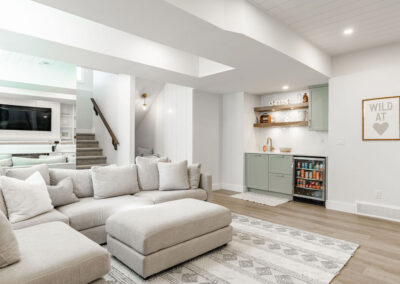
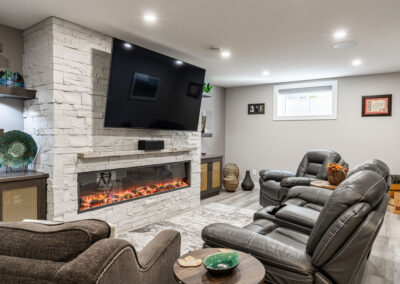
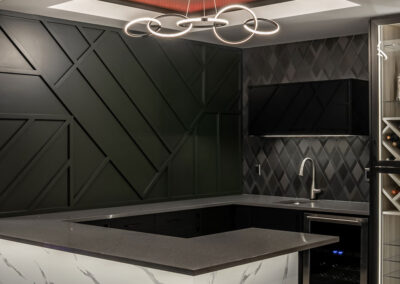
To ensure your project starts on the right foot, it’s vital to partner with a team that prioritizes these unseen elements. Explore our gallery of premium basement developments to see the final product of a process that puts foundational integrity first.
From Problem to Premium Space: Turning a Liability into a Luxury Asset
Once your unfinished basement has been properly assessed and prepared—sealed, insulated, and confirmed to be dry and safe—its potential becomes limitless. This initial investment in invisible luxury unlocks the freedom to create a space that truly enhances your lifestyle and adds significant value to your home. A correctly prepared basement is the foundation for any high-end application, from a custom basement suite to an immersive home theatre.
In Saskatoon, developing a legal basement suite is a popular and financially savvy choice. With strong rental demand, a suite can provide a steady income stream that offsets mortgage costs and turns your basement into a revenue-generating asset. However, creating a legal basement suite in Saskatoon requires strict adherence to building codes, including specific requirements for egress windows, fire separation, ceiling height, and independent ventilation systems. Tackling these requirements from the start is essential.
For those seeking lifestyle enhancements, the possibilities are equally exciting. Imagine a walk-out basement development that seamlessly blends indoor and outdoor living, a state-of-the-art home gym, a sophisticated office space for remote work, or a family-focused entertainment hub. The key is that none of these dream spaces can be fully enjoyed if there is an underlying worry about moisture, mould, or air quality. The confidence to invest in high-end finishes, custom cabinetry, and premium flooring comes directly from the knowledge that the space is fundamentally sound.
Local Expert FAQ
What is the very first thing I should do before planning a basement development in Saskatoon?
Before you even think about layouts or colours, you must assess for moisture and radon. Purchase a long-term radon test kit (91+ days) to get an accurate reading of your home’s levels, especially since Saskatchewan has such high concentrations. At the same time, conduct a thorough visual inspection of your foundation for cracks, flaking, or white powder (efflorescence) after heavy rain or snowmelt. These two steps will inform the entire foundation of your project.
Are hairline cracks in my concrete floor normal or a sign of a big problem?
Many homes in Saskatoon develop minor cracks due to the shifting of our expansive clay soil. A hairline crack may not be a structural emergency, but it is always a potential pathway for moisture and radon gas. Industry professionals recommend sealing all cracks, regardless of size, before covering them with flooring or walls. The concern escalates if a crack is widening, is wider than a credit card, or if one side is higher than the other—these are signs that warrant a professional structural assessment.
Do I really need a permit for a basic basement finishing project?
Yes. According to the City of Saskatoon, any basement development that involves framing, plumbing, or electrical work requires a building permit. Attempting to finish your basement without the proper permits is a costly mistake. It can lead to fines, void your home insurance, and create major problems when you decide to sell your home. A professional contractor will manage the entire permit process to ensure your project is compliant and safe.
What is the biggest difference between a standard and a high-end basement finish?
While finishes like flooring and fixtures are obvious differentiators, the true mark of an ultra-premium basement finishing project is the investment in “invisible luxury.” This means going beyond the minimum code requirements for things like insulation, soundproofing, and moisture management. It involves using superior materials like spray foam insulation for a perfect seal, installing a high-quality subfloor system to keep flooring warm and dry, and designing sophisticated lighting and ventilation systems for ultimate comfort. It’s the focus on long-term performance and durability, not just initial appearance.
Key Takeaways
- The most costly mistake is finishing a basement without first addressing underlying moisture, foundation, and soil gas issues.
- Saskatoon’s unique climate, with expansive clay soil and intense freeze-thaw cycles, puts constant stress on foundations, making proactive waterproofing essential.
- Ignoring minor issues like hairline cracks or efflorescence can lead to catastrophic costs down the road, including mould remediation and complete reconstruction.
- Basement problems affect your entire home’s air quality. Given Saskatchewan’s high radon levels, testing and mitigation are critical for your family’s health. [cite: 6,