Beyond Drywall: 5 Architectural Details That Distinguish a Luxury Basement from a Standard Reno
Picture this: you walk down the stairs into a newly finished basement. The walls are painted, the carpet is new, and there are pot lights overhead. It’s clean, functional, and adds usable square footage. But does it feel special? Does it feel like a seamless, integrated part of your home? For many Saskatoon homeowners, the standard approach to basement development achieves the basics but misses a crucial opportunity. The real magic—the kind that elevates a lower level from a mere renovation to an ultra-premium living space—lies in the architectural details that go far beyond simple drywall and paint.
A common misconception is that luxury in a basement is defined only by expensive finishes like a granite bar top or a high-end home theatre system. While those elements are fantastic, true luxury is woven into the very structure of the space. It’s about thoughtful design that solves classic basement problems—low light, awkward layouts, exposed ductwork—with grace and intention. It’s the difference between a space that feels like an afterthought and one that feels like it was always meant to be there. Industry professionals consistently find that investing in architectural enhancements not only dramatically improves the enjoyment of the space but also yields a significant return on investment by creating a cohesive, high-value home.
1. The Ceiling: Your Overlooked Fifth Wall
In a standard basement renovation, the ceiling is often an exercise in compromise. The goal is typically to cover up ductwork, plumbing, and wiring as efficiently as possible, resulting in a low, flat, and uninspired surface dotted with pot lights. A luxury basement, however, treats the ceiling as a primary design feature—a “fifth wall” with the power to define zones, add grandeur, and solve structural challenges elegantly.
Instead of just boxing out ductwork with flat drywall soffits, consider architectural ceiling treatments:
- Coffered Ceilings: This classic design features a grid of intersecting beams that create a pattern of recessed panels. In a basement, this is an incredibly sophisticated way to handle varying ceiling heights and conceal structural elements. The beams can strategically hide main ducts, while the recessed panels can be raised to maximize height in other areas, creating a sense of depth and grandeur that makes low ceilings feel intentionally designed.
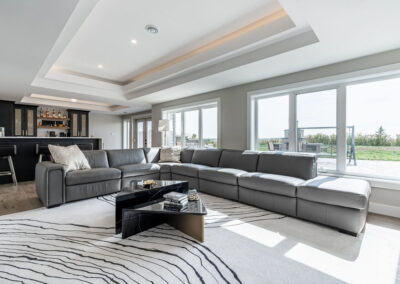
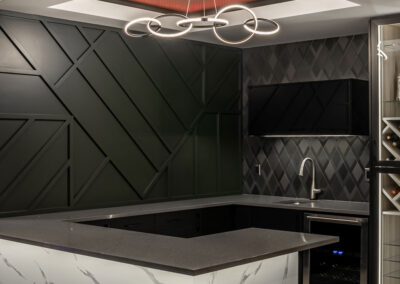
- Tray Ceilings: A tray ceiling has a single raised central section resembling an inverted tray. This is perfect for defining a specific area, like a media room or a central seating area. The border of the tray can house ductwork, while the raised portion adds vertical space and provides an ideal location for ambient cove lighting, which casts a soft, even glow upwards and eliminates the harsh glare of direct downlighting.
- Integrated Lighting Design: A premium basement design moves beyond a simple grid of pot lights. It involves a layered lighting plan that incorporates recessed LEDs, hidden cove lighting, stylish pendant lights over a bar or island, and strategically placed wall sconces. This not only provides better illumination but also creates mood and highlights other architectural features. The goal is to make the lighting feel built-in and purposeful, not just functional.
Insider Tip: A common mistake is trying to force a perfectly flat, level ceiling across the entire basement. This often results in a lower overall ceiling height to accommodate the lowest-hanging pipe or duct. A luxury approach embraces the variations, using coffered or tray designs to turn those necessary soffits into beautiful, intentional architectural statements.
2. Custom Millwork and Integrated Built-ins
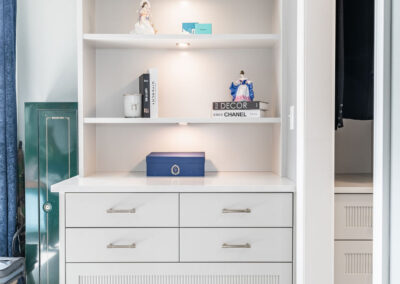
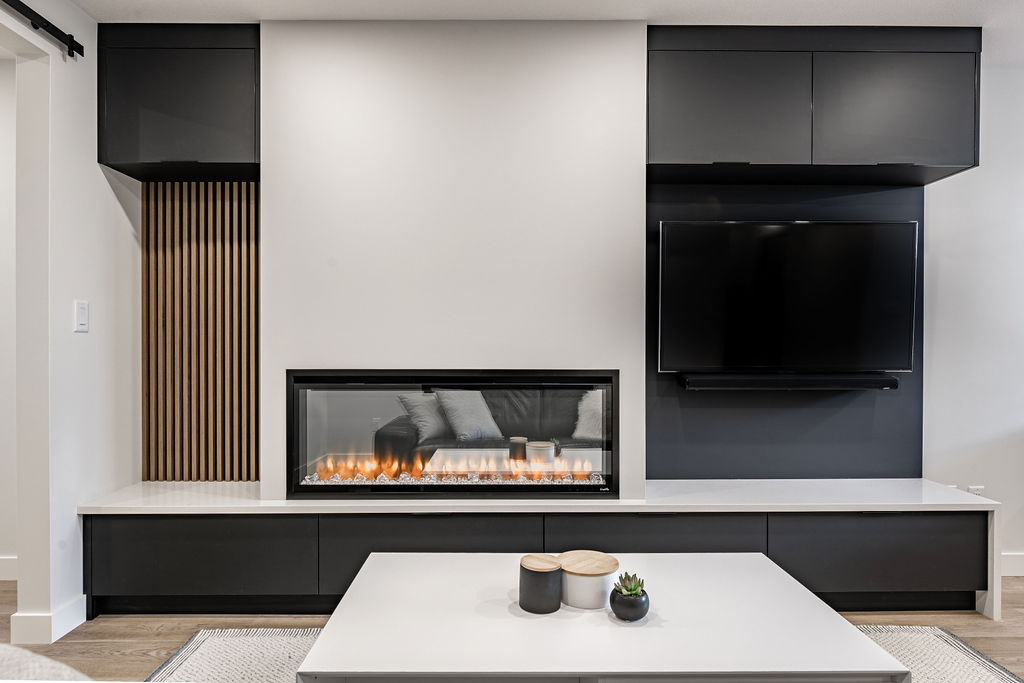
Nothing says “custom” like beautifully crafted millwork. While a standard basement might feature a standalone TV stand and some store-bought bookshelves, an ultra-premium basement integrates storage and features directly into the architecture. This creates a seamless, uncluttered look that maximizes every square inch of space and feels completely bespoke.
Consider these examples of custom basement finishing:
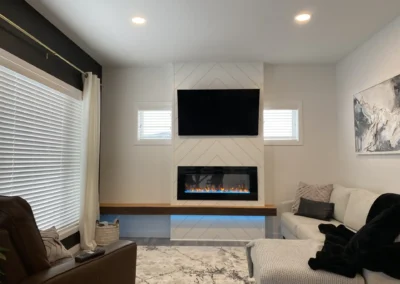
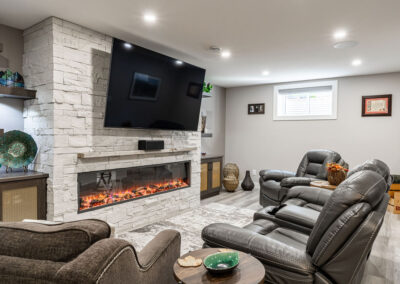
- Full-Wall Entertainment Centers: Imagine a wall dedicated to your media needs, with custom cabinetry to hide components, floating shelves for decor, and integrated lighting to create a focal point. The TV is no longer just sitting on a console; it’s part of a larger architectural feature.
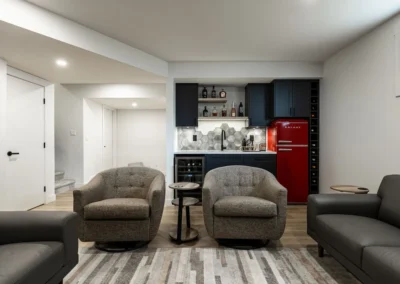
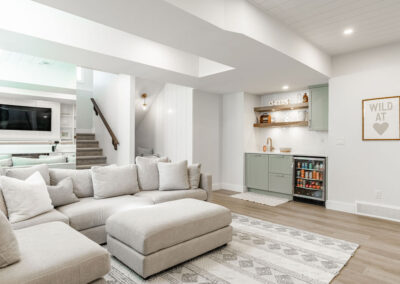
- Bespoke Wet Bars and Kitchenettes: A luxury basement bar is more than just a counter. It’s a fully integrated feature with custom cabinetry, panel-ready appliances (like beverage fridges and dishwashers), stone countertops that may waterfall to the floor, and a backsplash that ties into the room’s overall design.
- Library Walls and Reading Nooks: For a cozy retreat, a wall of floor-to-ceiling built-in bookshelves can transform a simple room into a sophisticated library or study. Add a window seat with built-in storage drawers underneath for a perfect reading nook.
- Integrated Storage Solutions: Professionals look for clever ways to hide storage. This could be concealed cabinets under the stairs, bench seating with lift-up tops, or even full-height paneled walls where some panels discreetly open into hidden storage closets.
The key here is that the millwork isn’t just placed in the room; it becomes the room. It’s designed to fit the specific dimensions and purpose of the space, providing a level of finish and functionality that freestanding furniture can’t match.
Designing and executing intricate millwork requires a high level of craftsmanship and experience. For professional guidance on creating stunning, functional built-ins for your custom basement development, Axium Interiors can help design and build a solution tailored to your home.
3. Deliberate Transitions and Architectural Flow
In many standard basement renovations, you can clearly tell where one area ends and another begins because of abrupt transitions—a doorway, a change in flooring, or a stark corner. A high-end basement contractor focuses on creating a natural and inviting flow between spaces using thoughtful architectural transitions.
This is about making the lower level feel like a cohesive extension of the main floor, not a separate, segmented zone. Here’s how it’s done:
- Cased Openings and Archways: Instead of a standard drywall-wrapped opening between the main rec room and a games area, a cased opening with proper trim and moulding adds substance and a sense of passage. An elegant archway can soften the transition and add a touch of classic architectural style.
- Wrapping Structural Posts: Those necessary steel support posts are often an eyesore. A standard solution is to box them in with drywall. A luxury solution is to turn them into intentional architectural columns. This can be done by wrapping them in custom millwork to match the built-ins, creating a square craftsman-style pillar, or even encasing them in stone or reclaimed wood to create a rustic focal point.
- Consistent High-Quality Flooring: Chopping up a basement with different types of flooring (e.g., carpet in the TV area, laminate in the games area) can make the space feel smaller and disjointed. Using a single, high-quality flooring material like luxury vinyl plank (LVP), engineered hardwood, or premium carpet throughout creates visual continuity and makes the entire level feel larger and more unified.
Insider Tip: Here in Saskatoon, a high-quality subfloor is non-negotiable for warmth and moisture management. Experts in basement development in Saskatoon consistently recommend installing a dimpled membrane and insulated subfloor panels before the finished flooring. This creates a thermal break from the cold concrete slab, prevents moisture from getting trapped, and makes the floor significantly warmer and more comfortable underfoot—a true luxury feature you feel rather than see.
4. Elevated Walls and Enhanced Natural Light
Drywall is a functional surface, but it rarely adds character on its own. A premium basement design moves “beyond drywall” by incorporating feature walls and architectural details that add texture, depth, and visual interest. At the same time, it prioritizes maximizing natural light to combat the subterranean feel.
Wall Treatments:
- Stone or Brick Veneer: A floor-to-ceiling stone feature wall behind a fireplace or bar can become the stunning centerpiece of the room, adding a natural, organic texture.
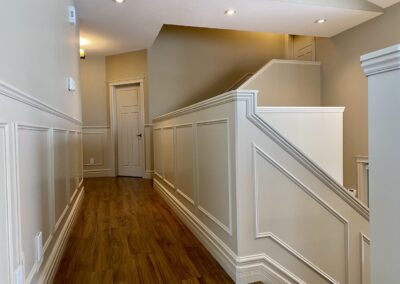
- Wood Paneling and Millwork: This isn’t the 1970s wood paneling. Modern applications include sleek vertical slats of white oak or walnut for a contemporary feel, or traditional board-and-batten or wainscoting for a classic, timeless look. These details add a layer of craftsmanship and sophistication.
- Built-in Niches: Recessed wall niches with dedicated lighting are perfect for displaying art, sculptures, or family photos. They create purposeful display space without cluttering the room with extra furniture.
Maximizing Light:
- Oversized Window Wells: Standard metal window wells do little for light or aesthetics. Upgrading to oversized, terraced window wells made from stacked stone or precast concrete allows for much larger basement windows, flooding the space with natural light and providing a pleasant view of greenery.
- Egress Windows: For any legal basement bedroom in Saskatoon, an egress window is a code requirement. Instead of installing the bare minimum size, a luxury approach treats this as a design opportunity, installing the largest window possible to make the room feel bright and airy.
- Glass Doors and Walls: When dividing spaces, such as for a home gym or office, using glass walls or doors allows light to flow through the entire level, maintaining an open, connected feeling.
If you’re unsure how to best configure your basement layout to maximize light and incorporate high-end features, our premium basement design services can provide clarity. Contact Axium Interiors to explore the possibilities for your space.
5. Seamlessly Integrated Technology and Comfort Systems
Luxury is not just about what you see; it’s about how the space makes you feel and how effortlessly it functions. In a high-end basement, technology and comfort systems are not afterthoughts—they are seamlessly integrated into the design from the very beginning.
This goes far beyond just having Wi-Fi. It’s about creating an environment that is comfortable, convenient, and immersive:
- Integrated Audio: Instead of visible speakers on shelves, a luxury setup features in-wall and in-ceiling speakers that are professionally wired and calibrated for the room’s acoustics. For a dedicated home theatre, this includes a full surround-sound system that is completely hidden from view.
- Smart Lighting and Climate Control: Imagine setting “scenes” for your basement—”Movie Night” could dim the lights, lower a hidden projector screen, and adjust the thermostat with a single button press or voice command. This level of automation is a hallmark of modern luxury.
- Dedicated HVAC Zoning: Basements naturally have different heating and cooling needs than the rest of the house. A standard reno might just tap into the existing system, leading to a space that’s always too cold in the winter and damp in the summer. A premium basement development includes a dedicated HVAC zone, or at least properly balanced ducting with its own thermostat, ensuring the lower level is always perfectly comfortable.
- Radiant In-Floor Heating: For the ultimate in comfort during Saskatoon’s cold winters, radiant in-floor heating provides a silent, even warmth that rises from the floor. It’s an invisible luxury that makes tile or LVP floors feel wonderfully warm underfoot.
The goal is to have the technology enhance the experience without dominating the aesthetic. Wires are hidden, speakers are invisible, and controls are intuitive. This level of integration requires careful planning from the outset, which is why it’s a key differentiator for a high-end basement contractor.
Local Expert FAQ
- What are the requirements for a legal basement suite in Saskatoon?
-
Creating a legal basement suite in Saskatoon involves meeting specific building code and zoning requirements. Key elements include a separate entrance, specific window sizes for egress in bedrooms, minimum ceiling heights, and interconnected smoke and carbon monoxide detectors. The province of Saskatchewan also offers the Saskatchewan Secondary Suite Incentive (SSI) Grant Program, which can provide significant financial support for constructing a new qualifying suite. It’s crucial to work with a knowledgeable contractor who can navigate the permit process with the City of Saskatoon and ensure your suite is fully compliant.
- How does Saskatoon’s climate affect luxury basement design?
-
Our climate presents unique challenges. The extreme cold requires superior insulation—well beyond code minimums—to ensure comfort and energy efficiency. Professionals in Saskatchewan recognize that proper exterior waterproofing, weeping tile systems, and a reliable sump pump are critical to manage spring melts and potential water intrusion. Furthermore, materials must be chosen carefully. For example, solid hardwood is generally not recommended for below-grade applications due to humidity fluctuations, making engineered hardwood or high-quality LVP a better luxury choice.
- What is a realistic basement development cost per square foot for a premium finish?
-
While a basic finish might range from $80 to $120 per square foot in Saskatoon, an ultra-premium basement finishing project incorporating the architectural details discussed here will be higher. For a high-end custom design with features like custom millwork, coffered ceilings, a wet bar, and integrated tech, costs can exceed $150 per square foot. The final investment depends heavily on the complexity of the design and the quality of materials selected.
Key Takeaways
- True luxury in a basement is defined by thoughtful architectural design, not just expensive finishes.
- Treat the ceiling as a “fifth wall” with coffered or tray designs to add grandeur and cleverly conceal ductwork.
- Custom millwork and integrated built-ins create a seamless, high-end look that freestanding furniture cannot replicate.
- Focus on creating flow with cased openings, properly finished columns, and consistent flooring to make the space feel larger and more cohesive.
- Go beyond plain drywall with feature walls of stone or wood, and maximize natural light with oversized windows.
- Integrate technology like smart lighting and whole-home audio seamlessly into the design for ultimate comfort and convenience.
- For Saskatoon families, addressing our climate with superior insulation and moisture management is a critical, unseen component of a luxury renovation.
Disclaimer: While we aim for accuracy, please verify details for your specific situation. For personalized advice and to discuss how these insights apply to your specific needs, we would love to chat with you directly.
Transform Your Unfinished Basement into a Masterpiece
Your basement holds incredible potential to become the most-loved area of your home. Moving beyond a standard renovation and embracing these architectural details is the key to unlocking a truly exceptional living space. It requires a vision, meticulous planning, and expert craftsmanship.
If you’re ready to explore how a premium basement design can transform your home in the Saskatoon area, we invite you to start a conversation with us. Contact Axium Interiors today for a consultation and let’s build a lower level that elevates your entire home.